Observatory · China Mission 2026
Technological Innovation in China: a journey that changes the way you see things
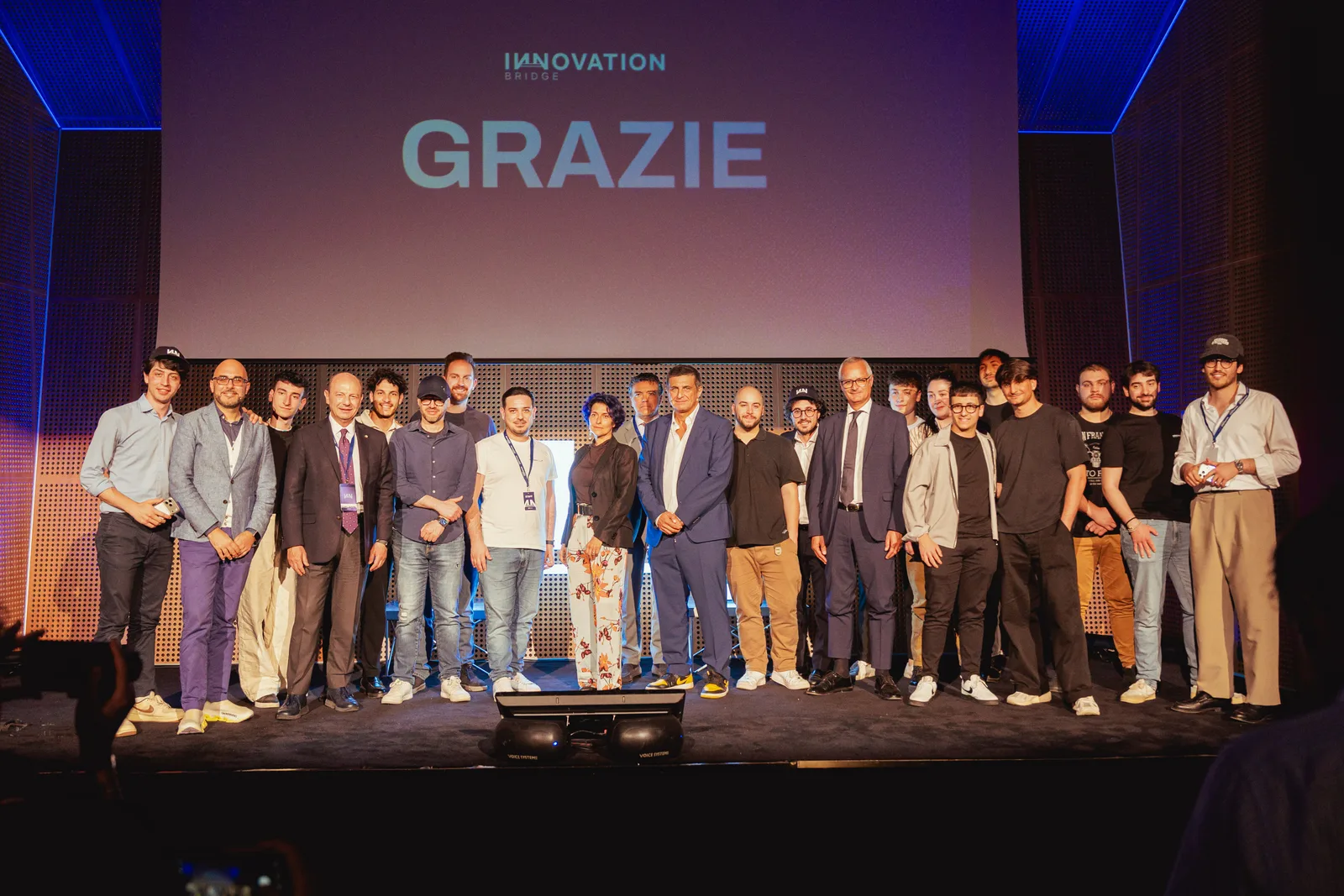
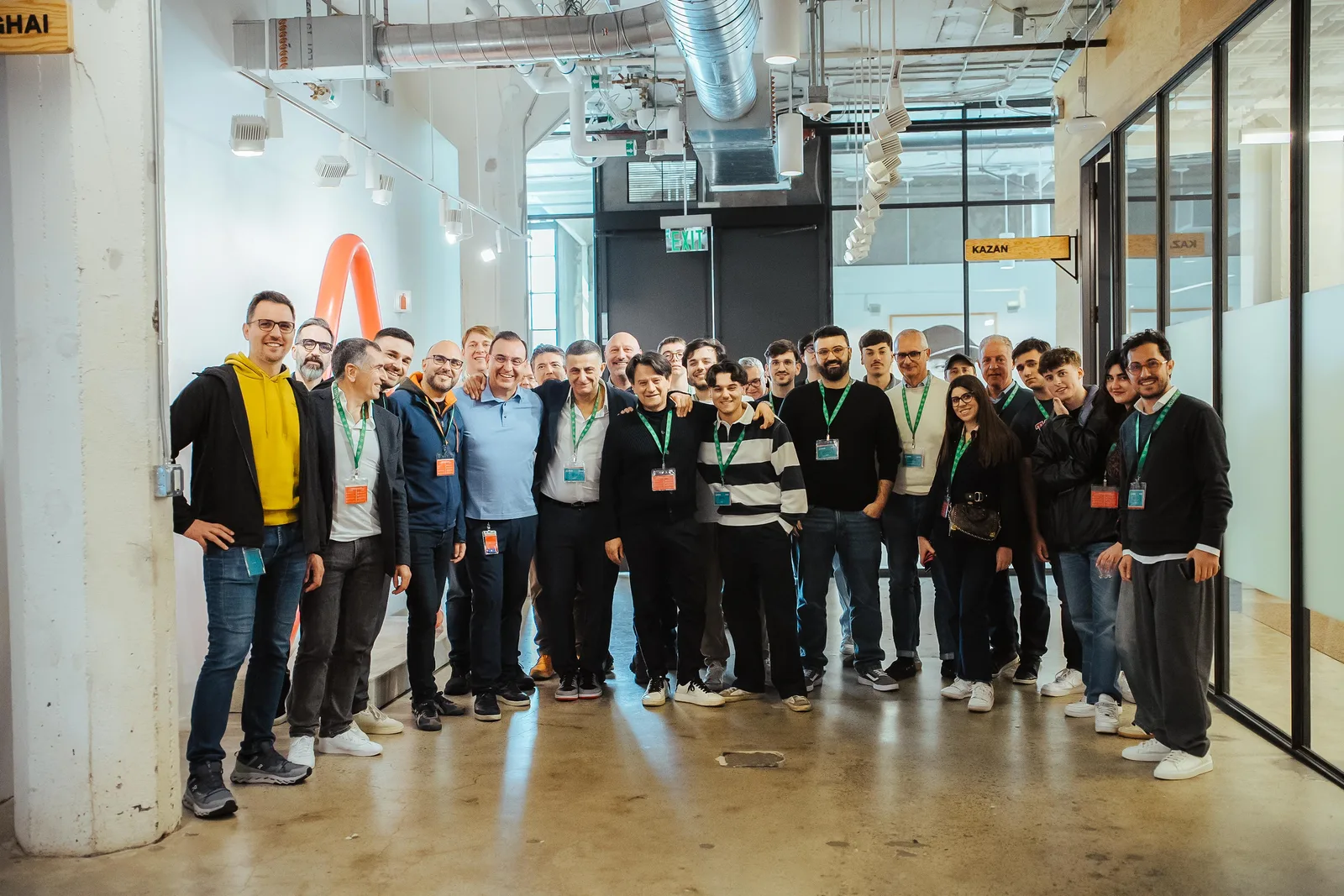
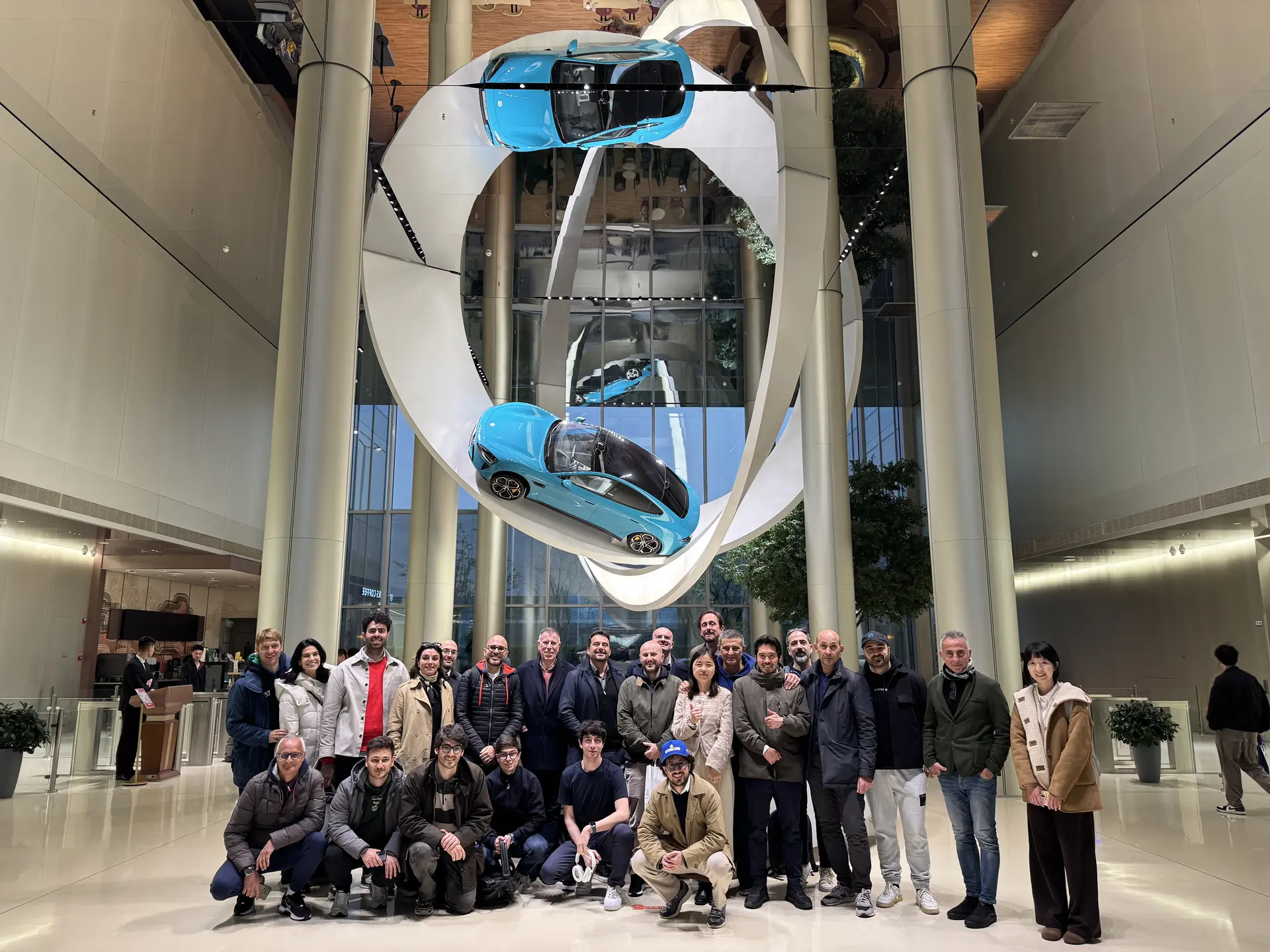
There are journeys that confirm what we already know, and journeys that force us to redraw the maps we had in our heads. The Innovation Bridge China 2026 – From the Silk Road to Technological Innovation mission belongs, without question, to the second category. For ten days, from 8 to 20 April, I led a delegation of twenty-two people — entrepreneurs, managers, academics and university students — through the cities that are shaping tomorrow: Beijing, Shanghai, Cixi, Hangzhou and Shenzhen. The presence of the younger members is no detail: the first bridge the Foundation wants to build is precisely the one between the "differently young" — those who often hold the decision-making power — and the young, who represent the future in every sense.
We left Italy with a notion of technological innovation in China still rooted in old stereotypes. We returned with the clear-eyed awareness of having witnessed a paradigm shift firsthand. I want to share it with you as I experienced it, company by company, because I believe it is a story that concerns all of us — even those who live far from major centres and fear being left behind.
From "Made in China" to global benchmark: the paradigm has changed
Let me start with the conclusion, because it is the lens through which I reread every stop along the way. For twenty years, the West has portrayed China as the world's factory: low-cost products, modest quality, imitation rather than invention. That narrative is simply no longer true. In high-technology sectors, China is no longer catching up — it is setting the standard.
The numbers leave no room for interpretation. According to the International Energy Agency (IEA), in 2025 China produced roughly three quarters of all electric vehicles on the planet and became the world's leading car exporter, with electric vehicle exports doubling to a record of more than two and a half million units. More than 80% of the world's battery cells are manufactured in China. And whilst in 2020 electric cars accounted for just over 6% of the Chinese market, they have now surpassed half of all new car sales.
The same story repeats itself in robotics. The International Federation of Robotics confirms that China, within a decade, has gone from roughly one fifth to more than half of global industrial robot installations, with an operational fleet that has surpassed two million units — the largest in the world. And for the first time, Chinese manufacturers are selling more domestically than foreign suppliers.
In high-technology sectors, China is no longer catching up — it is setting the standard.
That is the context. Now let me take you inside the companies, because that is where statistics become flesh, steel and silicon.
Beijing: where AI policy meets the technology giants
Our first visit, shortly after landing in Beijing, was to the Xiaomi EV Factory. For Europeans, Xiaomi is still "the smartphone people". In China, it is a company that entered the premium car market in a matter of years: in the showroom, an SU7 electric saloon rotates suspended in mid-air, like a manifesto. To build it, Xiaomi constructed a smart factory — effectively a "dark factory" that is almost entirely automated — where enormous body sections are die-cast in a single operation, with an automation that redefines what "cycle time" means. It is vivid proof of one idea: in China, the distance between consumer electronics and automotive has shrunk to nothing.
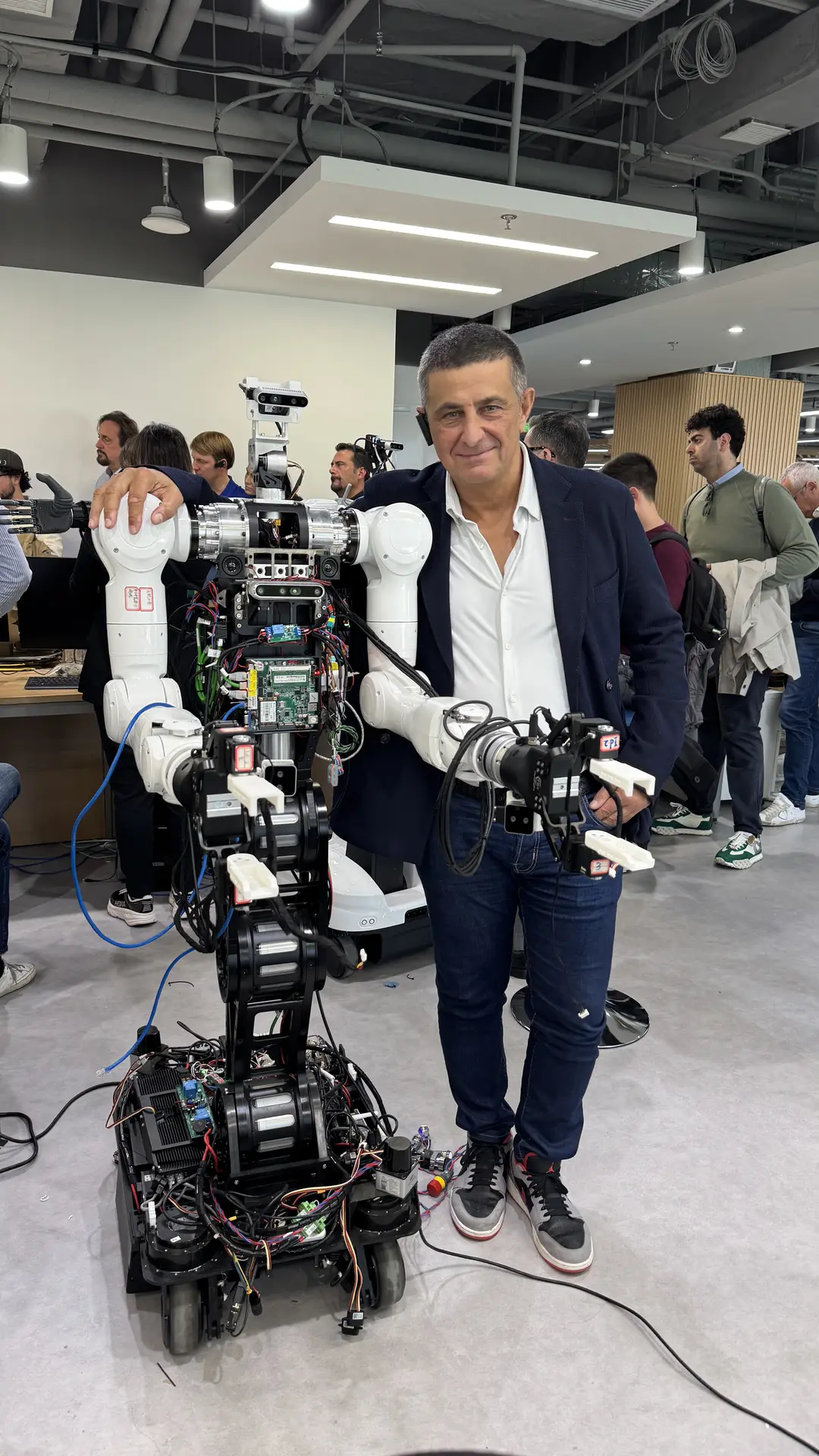
The following day we entered the Zhongguancun Embodied Intelligence Innovation Industrial Park, in the Haidian district: Beijing's principal hub dedicated to humanoid robotics and "embodied intelligence" — the AI that learns to move and act in the physical world. We arrived there thanks to Lorenzo Gonzo — formerly Scientific Attaché at the Italian Consulate in Chongqing, now Head Advisor for International Cooperation at ITTN, the international technology transfer network. There I was able to get up close to a humanoid robot still "open", with its cables and motors exposed, built by Boundless Power: a start-up founded in March 2025 that, by April 2026, had already raised more than 100 million dollars.
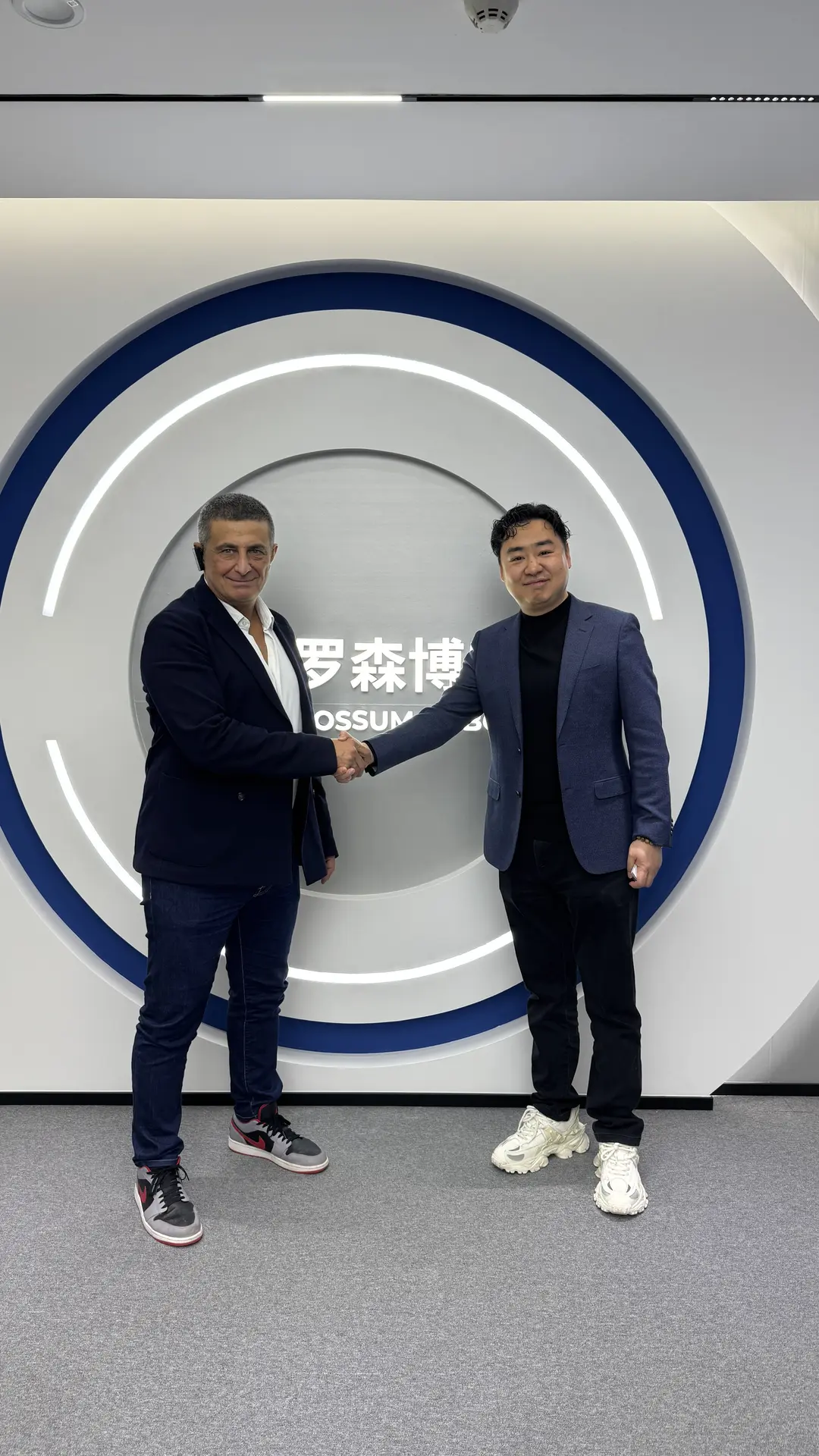
Also there, I shook hands with the founder of Rossum Robotics, a start-up whose surgical robot has already performed more than 800 complex orthopaedic procedures. A journey like this serves not only to observe — it serves to return home with real connections.
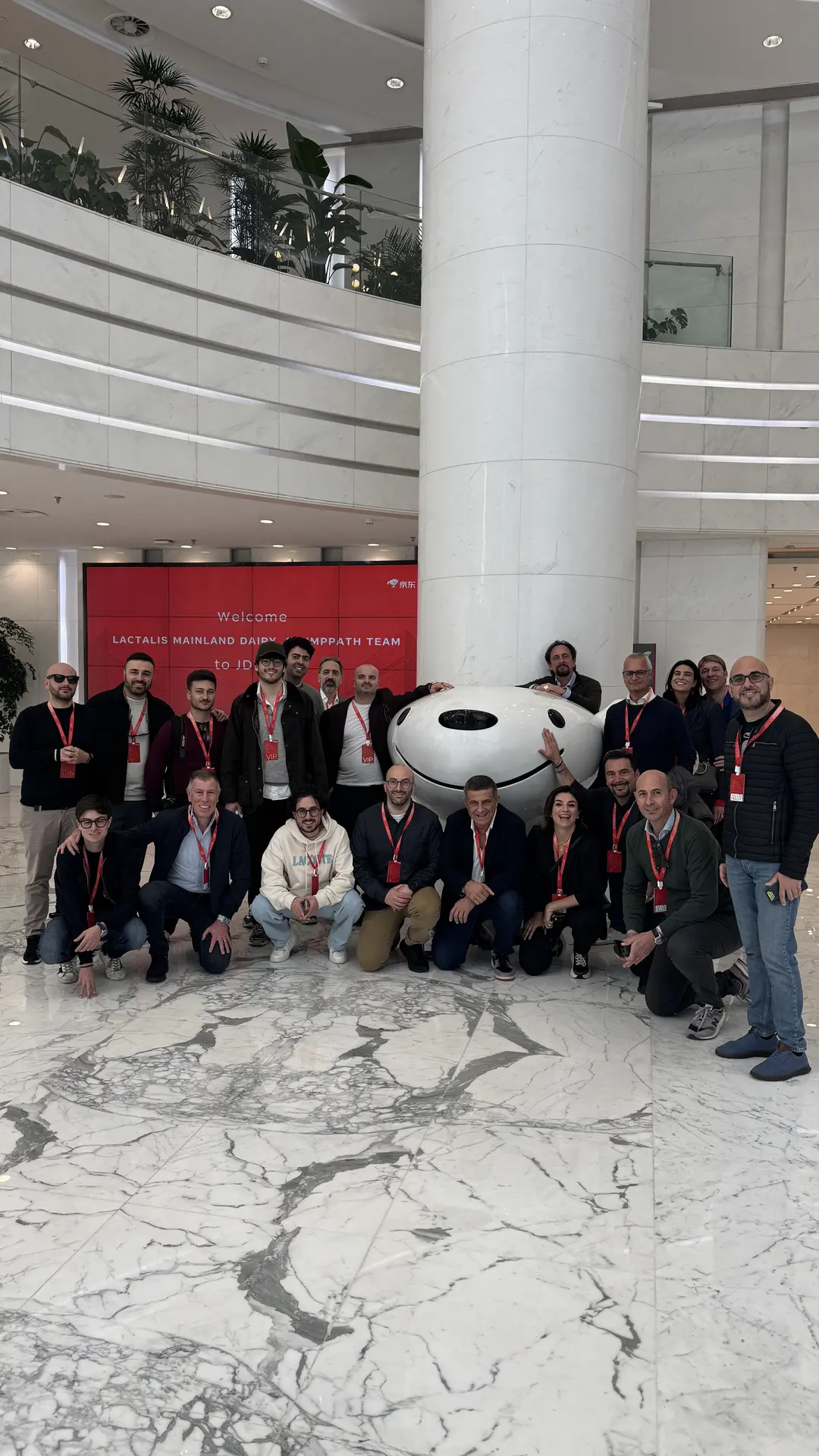
That afternoon, the VIP tour of JD.com revealed its logistics machine: warehouses where orders are sorted by automated systems and where delivery by drone and robot is everyday operations, not an experiment. In the evening, at the Italian Cultural Institute, we met the Italian Ambassador Massimo Ambrosetti: a dialogue that gave the mission the institutional framing it deserves.
The following day, standing before the Forbidden City and on the Great Wall at Mutianyu, I felt with great clarity the meaning of our work. A country that preserves millennia of history and, just a few dozen kilometres away, builds the robots of 2030. Past and future do not exclude each other — they speak to each other. That is precisely the bridge our Foundation seeks to represent.
Shanghai, Cixi and Hangzhou: finance, mobility and robots
From Beijing to Shanghai we travelled by high-speed train: over 1,300 kilometres in just over five hours, on an infrastructure that alone speaks volumes about a deliberate national choice.
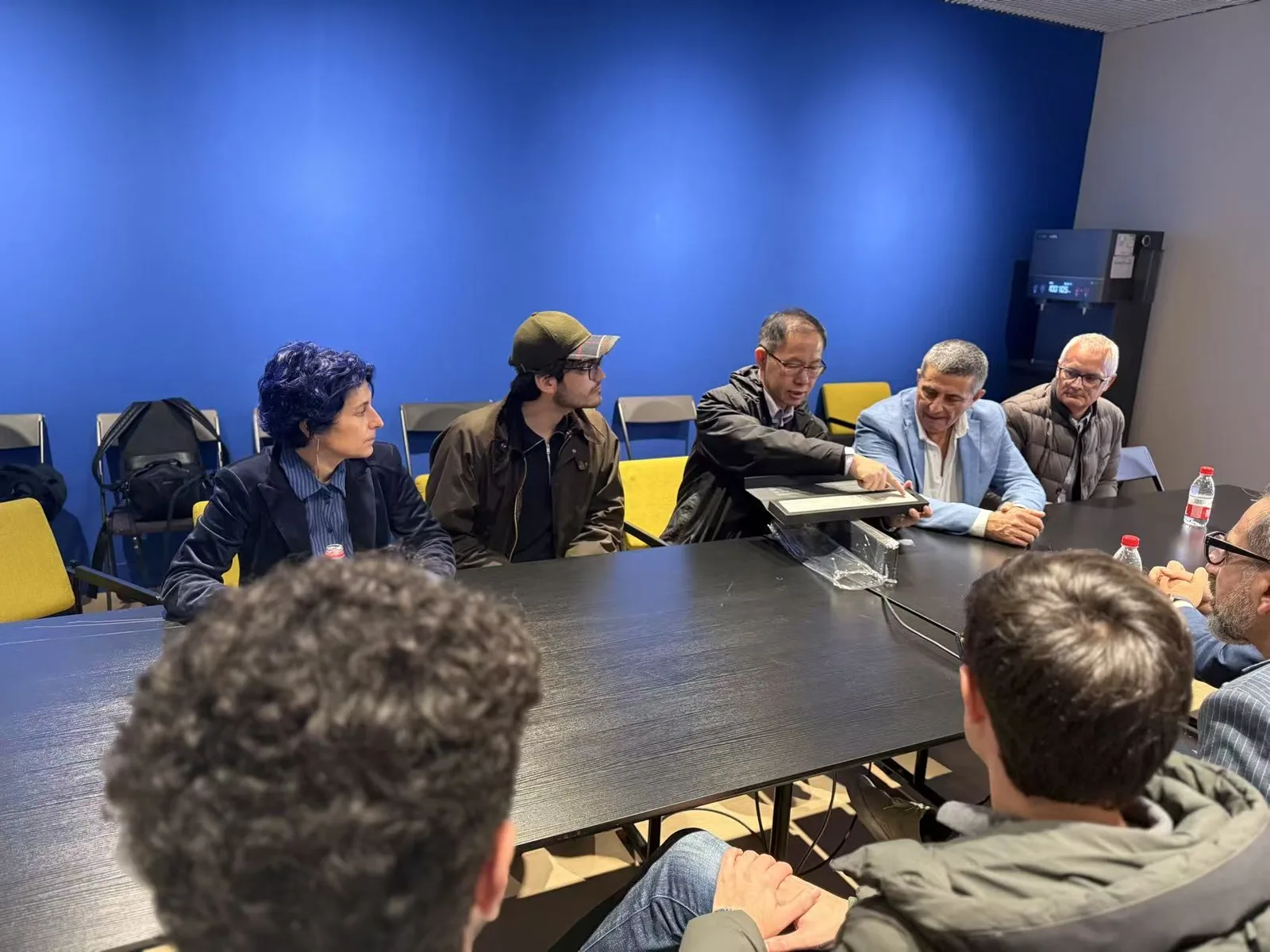
In Shanghai we brought together the academic world, Italian excellence and institutions. At Tongji University we were welcomed by the Dean of the College of Innovation and Design, Xin Xiangyang, alongside Prof. Avril Accolla: a meeting that went far beyond words. It gave rise to a collaboration between Tongji and the University of Cassino and Southern Lazio — an Erasmus student exchange and visiting professor programme — due to begin in September 2026. For a foundation rooted in Italy, seeing one of our universities sign an academic bridge with one of Shanghai's finest institutions is the thesis of this journey made concrete.
Geographical boundaries are no longer a barrier: a university from Lazio signs an agreement with Tongji University in Shanghai.
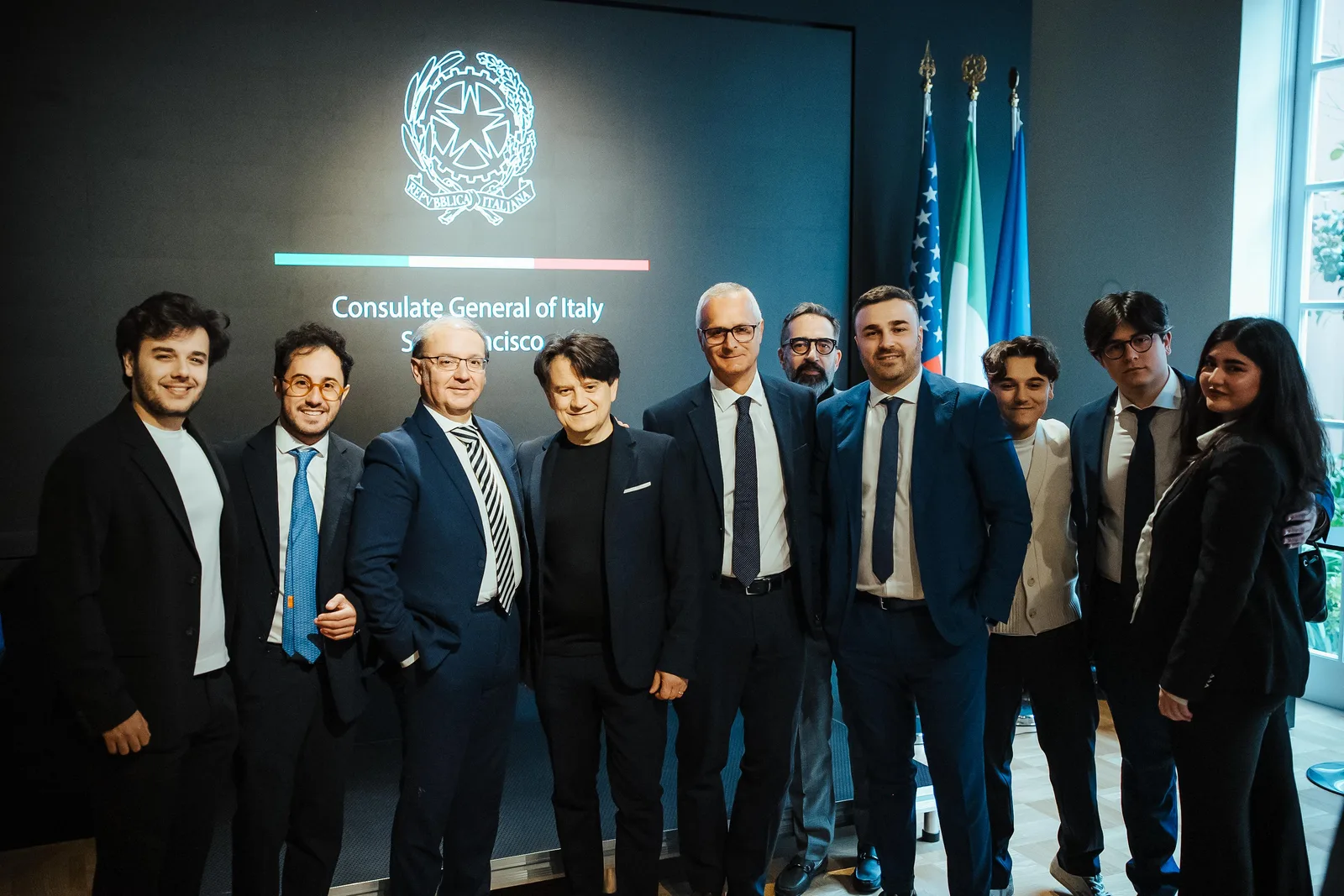
At Brembo Inspiration Lab Asia – Bilab I had the honour of bringing the Foundation's greetings alongside Brembo: an Italian centre of excellence that in China does not merely cope — it leads. At the Italian Consulate General, with Consul General Tiziana D'Angelo, the "Sistema Italia" event — with ICE and the Italian Chamber of Commerce in China — reminded us that our country, when it works as a team, has everything it needs to be at this table.
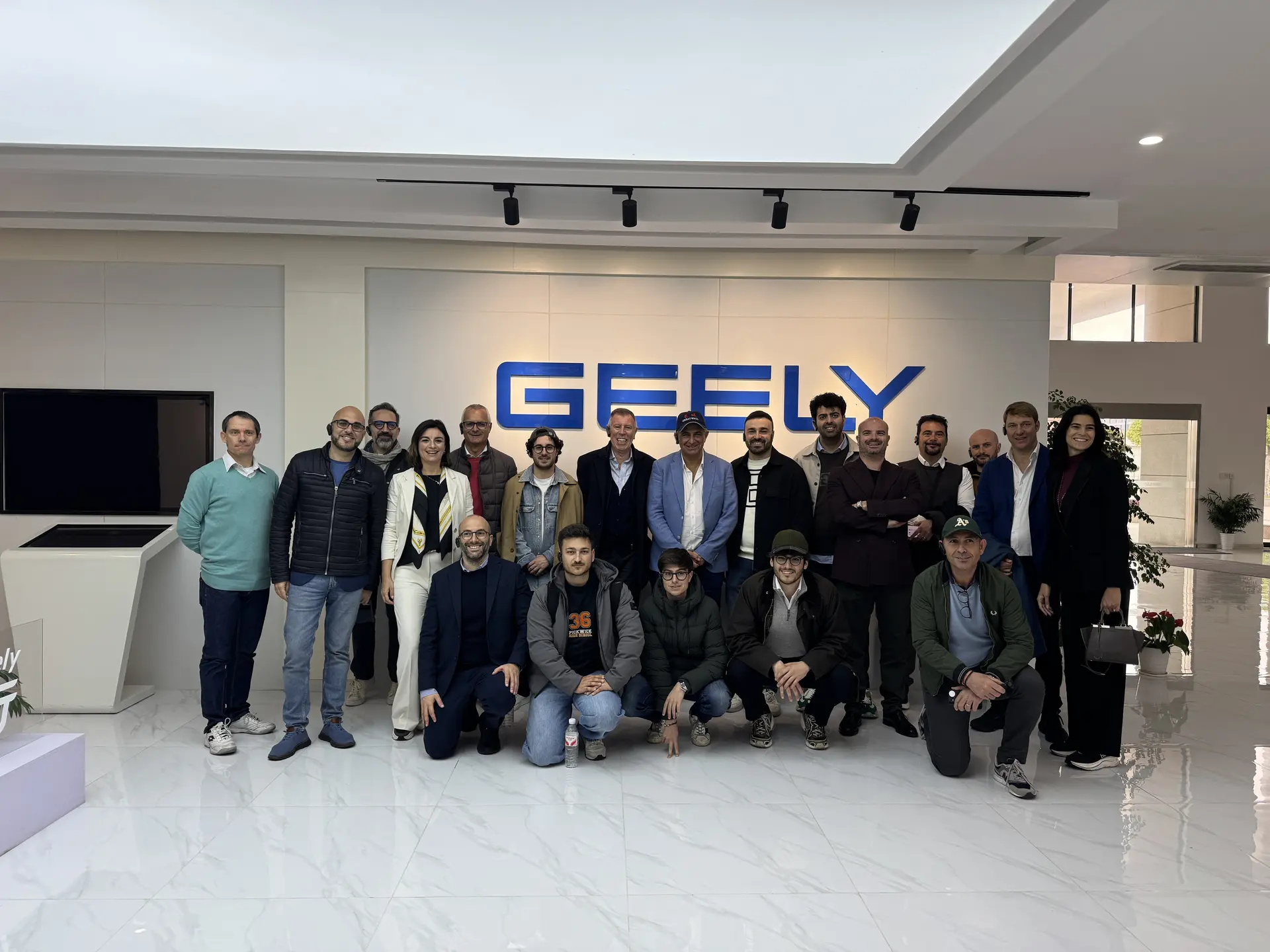
In the Hangzhou area we visited the smart manufacturing facility of the Geely Group — the reference factory for the Zeekr brand — where around 820 robots work to produce more than 300,000 vehicles per year: over 800 cars a day. During the visit they told us about their "dark factory" in Cixi, an almost entirely automated plant that operates without workers on the line — a production model that offers a clear glimpse of where Chinese manufacturing is headed.
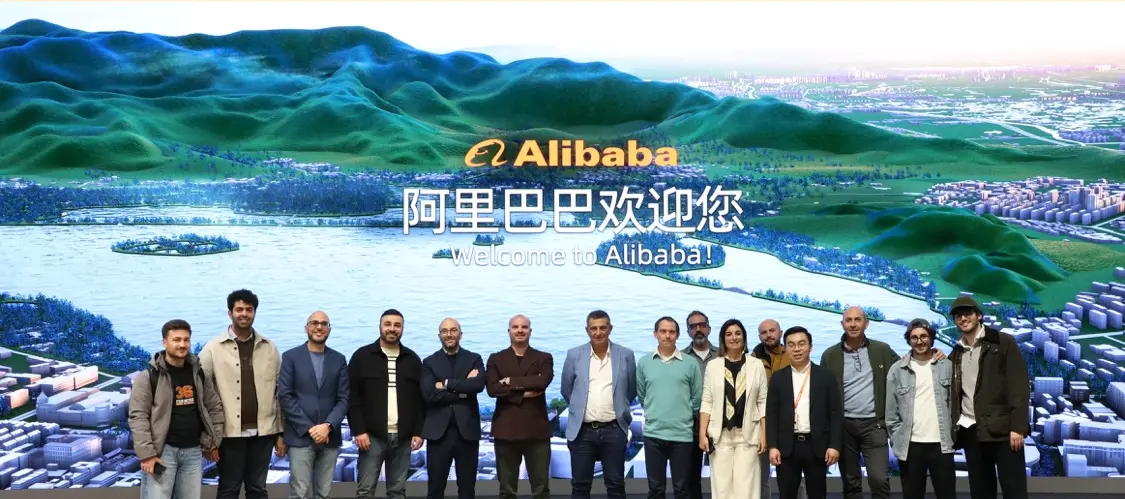
At Alibaba we understood that the company is not "an e-commerce website": it is cloud computing, artificial intelligence and digital infrastructure for entire continents.
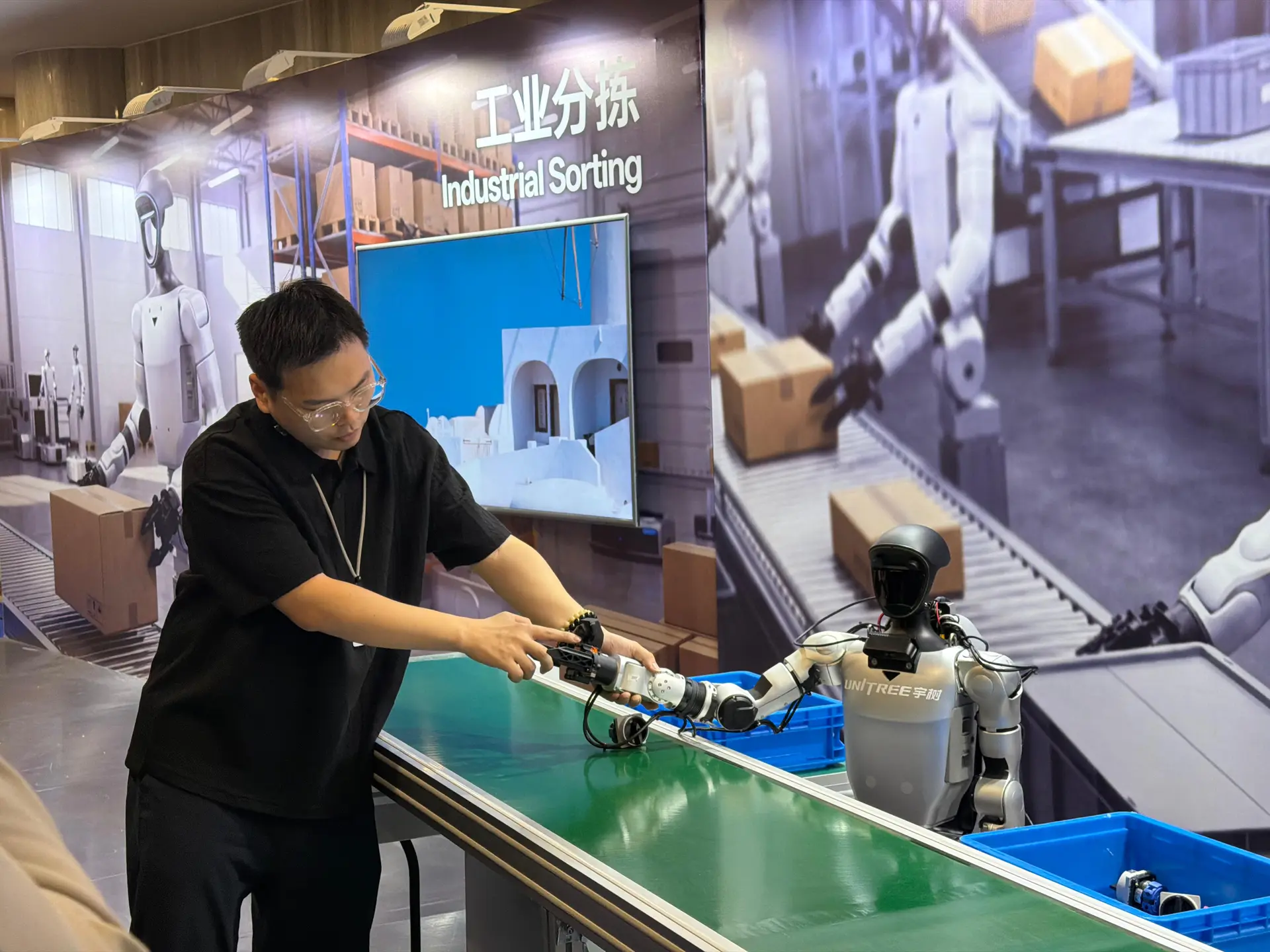
But it was Unitree Robotics that left us speechless. Watching the Go2 quadruped robots move with an almost animal-like agility, and a humanoid grasp and sort objects on a conveyor belt right in front of us, was one of those moments when you sense that the future has stopped being a promise. It is no coincidence that Chinese companies like Unitree now account for the vast majority of humanoid robot installations worldwide.
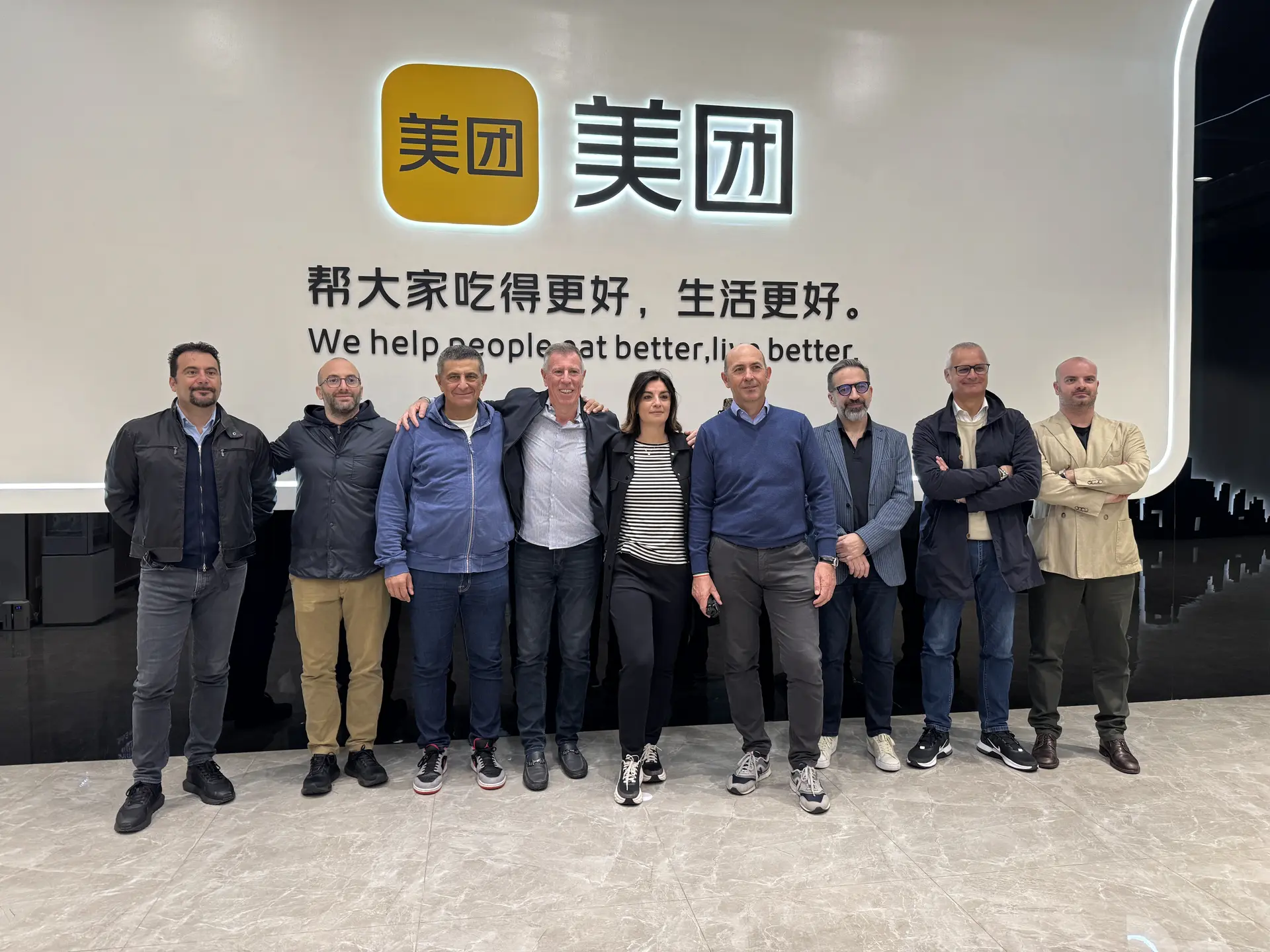
Rounding off the chapter: the headquarters of Meituan, the super-app that manages the daily lives of over seven hundred million people, and the Shanghai Data Exchange, the world's first exchange for trading data as digital assets. Each stop confirmed the same thesis: here, innovation is not a department — it is the connective tissue of the entire economy.
Shenzhen: the factory of the future and the world's hardware epicentre
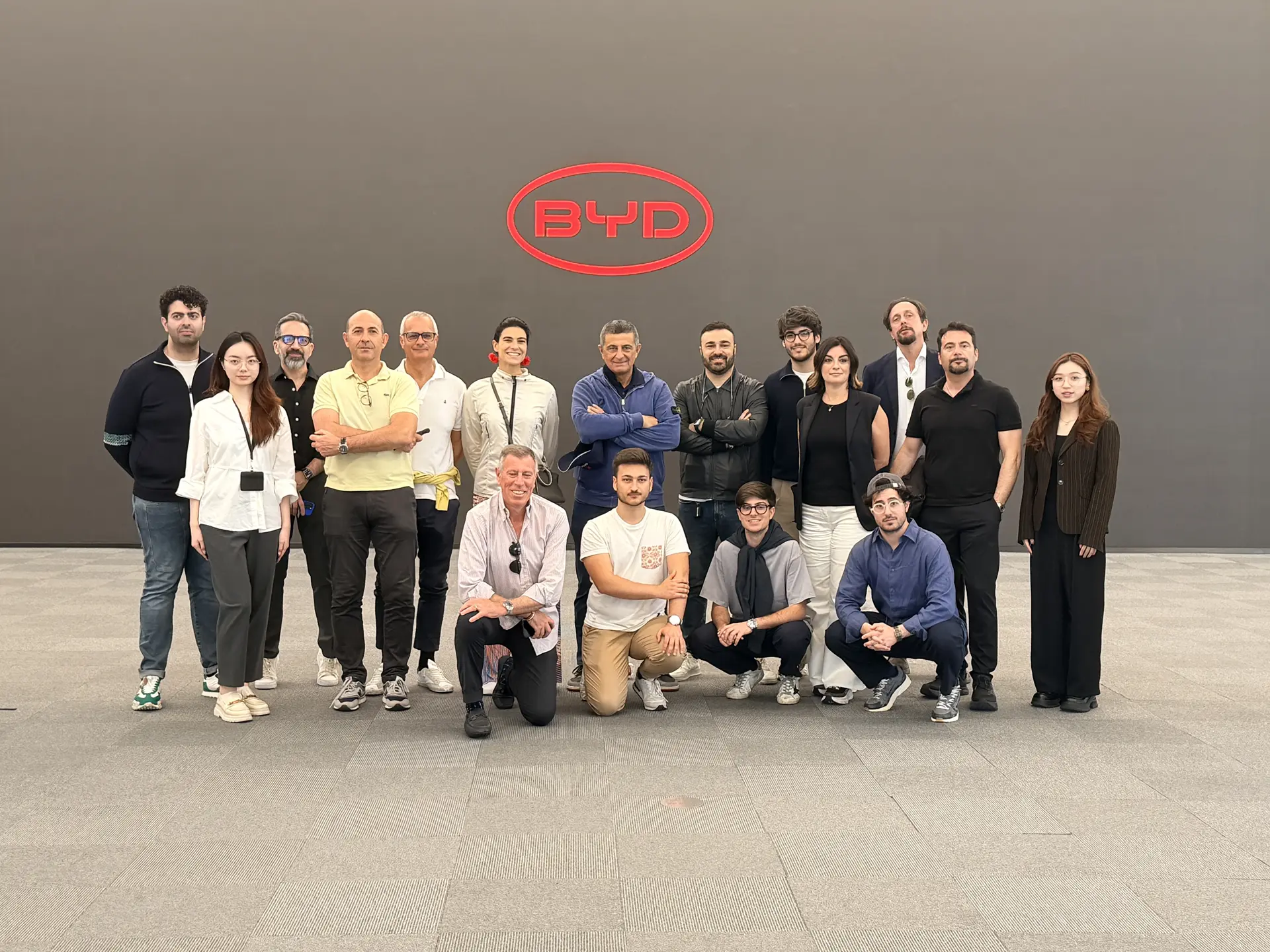
If Beijing is the head and Shanghai the heart, Shenzhen is the hands. In forty years it has gone from a fishing village to the world's hardware capital. We began with BYD, the world's leading manufacturer of electric vehicles and batteries: a campus where cars, batteries and electronics are born under the same roof. Then the largest DJI flagship store on the planet, the global leader in drones.
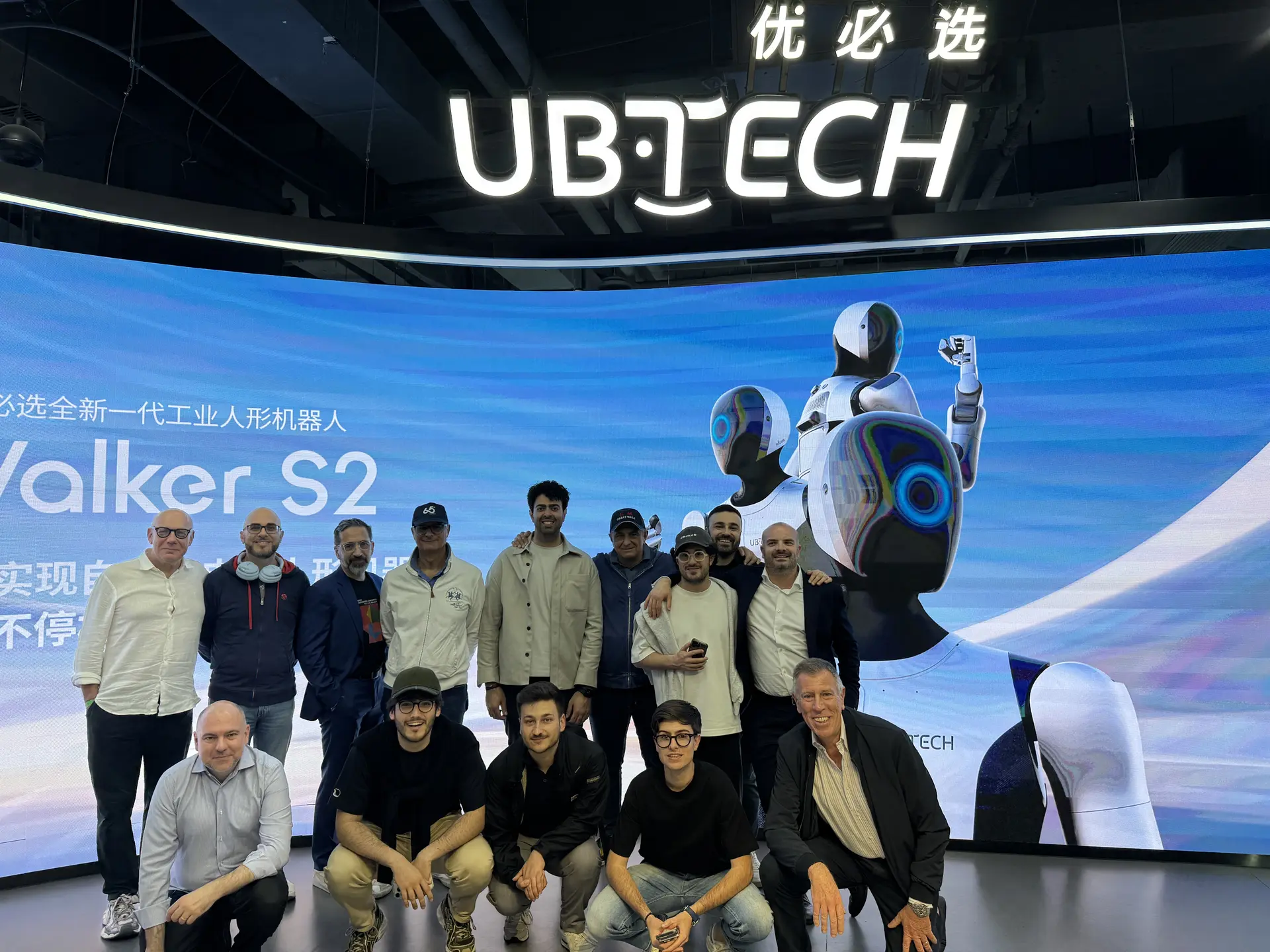
The technological heart of the visit, however, was humanoid. At UBTECH Robotics we saw the Walker S2 in action — an industrial humanoid robot already in mass production: UBTECH is the first company in the world to have achieved this, and it is listed on the Hong Kong Stock Exchange.
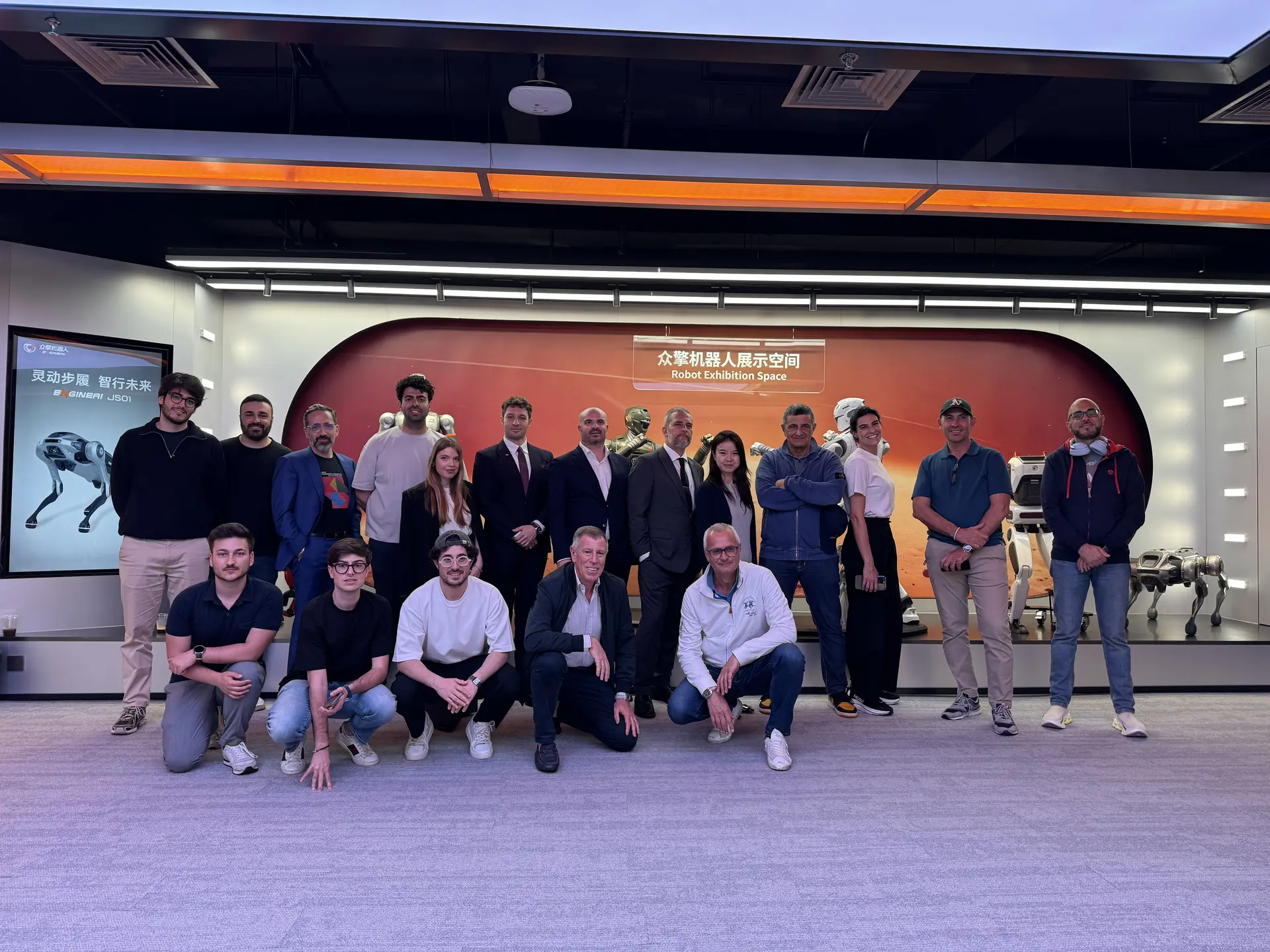
Immediately after, the start-up EngineAI: two generations of innovators just a few hundred metres apart. That is the Shenzhen ecosystem. We then saw the supply chain laid bare at Huaqiangbei, the world's largest market for electronic components: kilometres of stalls where you can find any chip or sensor in existence, and where an idea becomes a prototype in days rather than months.
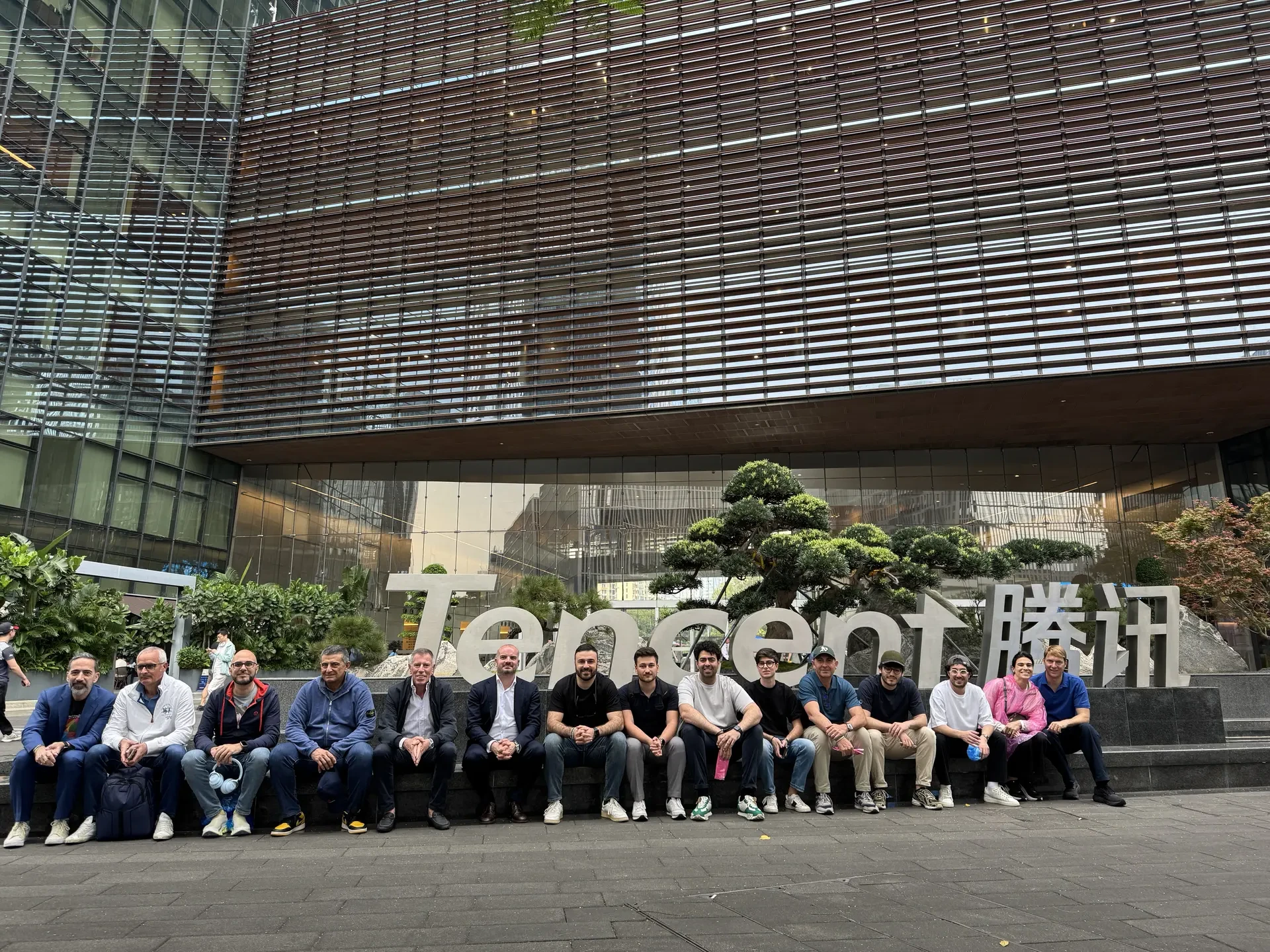
The final stop, at Tencent headquarters, gave us a sense of the full scale of everything we had seen: the company behind WeChat — the app that in China is simultaneously messaging platform, bank and digital identity — where we were welcomed by the global relations team.
Companies and institutions visited — China 2026
- Xiaomi EV Factory
- Zhongguancun AI Park
- Boundless Power
- Rossum Robotics
- JD.com
- Tongji University
- Brembo Bilab Asia
- Italian Consulate Shanghai
- Geely / Zeekr
- Alibaba
- Unitree Robotics
- Meituan
- Shanghai Data Exchange
- BYD
- DJI
- UBTECH Robotics
- EngineAI
- Huaqiangbei
- Tencent HQ
The Italian delegation in China
A journey like this is not made alone. The strength of the mission was its delegation: a team that brought together business, finance, public health, academia, communications and the innovation world — proof that when a territory works as a network, it can take its seat at the table of global protagonists.
The 22 participants of the mission
- Giancarlo De Leonardo — President, Fondazione Innovation Bridge
- Antonio Pizzutelli — Design Operations & Technology Innovation
- Francesco Cerilli — Management Control Director, ASL Frosinone
- Carlo Rinaldi — Director of Marketing & Communications, Humans.tech
- Marco Cimmino — Head of Strategy and Co-founder, Ubiquo Marketing
- Valerio Mizzoni — Co-founder, Ubiquo Marketing
- Vincenzo Formisano — President, Banca Popolare del Cassinate
- Donato Formisano — Undergraduate student, Luiss University Rome
- Francesco Pompeo — Co-founder, Dopamina Growth Agency
- Angelo Pio Pompeo — Undergraduate student, University of Rome
- Corrado Tatangelo — Producer
- Fabio Masi — Rai Film Director
- Luca La Mesa — Entrepreneur and tech investor
- Giulia Lapertosa — Co-founder, Carriere.it
- Andrea Geremicca — Director General, EIIS
- Alessandro Leonardi — Innovation Manager, Poste Italiane
- Andrea Tulli — Entrepreneur
- Dario Cerea — AI Expert
- Andrea Iacovanelli — Marketing Manager, ADI Apicoltura
- Manuela Polcaro — Innovation Expert
- Marco Dotto — Entrepreneur and life sciences investor
- Andrea Grimandi — FMCG Executive and tech investor
What all of this means for us
I did not go to China to admire and return empty-handed. I went — as we had done in 2025 in Silicon Valley, visiting Stanford, Berkeley, Google, Meta and Nvidia — because I believe that geographical boundaries are no longer a barrier. In a connected world, a territory like ours can engage with the global protagonists of innovation and bring home stimulus, contacts and method.
Three lessons I keep for myself and share with you. The first: China's advantage does not stem from cost, but from the speed with which an idea travels through the entire supply chain. The second: the innovation that matters is not that of an isolated company, but that of an ecosystem that connects businesses, universities, capital and institutions — precisely what a foundation like ours strives to build, in its own modest way and with great ambition. The third, and most important: the future is not something that happens to you — it is something you steer. We can choose to remain spectators of change, or to join those who are writing it.
The future is not something that happens to you — it is something you steer. We can choose to remain spectators of change, or to join those who are writing it.
The decisions we make today about technology shape the way we will live tomorrow. That is why we will keep building bridges: between Italy and the frontiers of innovation, between global enterprises and people, between our territory and a future we cannot afford to miss. Those who wish to walk with us on this bridge — by supporting the Foundation, by taking part in our programmes, or simply by sharing this story — will be among those who chose to lead, rather than to fall behind.
Fondazione Innovation Bridge – ETS organises annual study missions to the countries at the forefront of innovation.